Have you ever found yourself standing over the recycling bin, pointing a finger at your child, and giving a grand speech about plastic waste? We have all been there. But let's be honest, lecturing kids about the environment usually results in rolled eyes and instant tune-outs.
You want your children to care about the planet, but you do not want to become the household eco-cop. The good news is that you do not have to be.
The real goal is to build an internal love for nature rather than enforcing a rigid set of external rules. When kids care about the Earth from the inside out, sustainable choices become second nature. You do not need to preach to make a difference. In fact, taking a step back from the podium is often the most effective way to help them step up.
Leading by Example and the Silent Power of Habits
Children are like little mirrors, constantly reflecting the things we do rather than the things we say. If you tell them to save water while you leave the tap running during a long dishwashing session, they notice the contradiction.
Behavioral scientists at the conservation group Rare note that children are always scanning their environment for social cues.¹ They pick up on what is normal in your home. If you make composting, recycling, and repairing broken items a standard part of your day, your children will accept these practices as basic life skills rather than chores.
Try incorporating these quiet habits into your weekly routine:
• Visible sorting: Place color-coded recycling and compost bins in easy-to-reach spots so sorting waste is simple and expected.
• Aware shopping: Let your kids see you choosing loose, plastic-free apples instead of pre-packaged ones at the grocery store.
• The repair run: Instead of tossing a broken toy, let them watch you grab some glue or a screwdriver to fix it.
By normalizing these actions, you weave sustainability into the background of their lives. No speeches required.
Making Sustainability Fun with Hands-On Environmental Values
Who says learning about the planet has to feel like a science class? Play-based learning is one of the most effective ways to show kids how things work. When you turn sustainability into a game, the lessons stick without any lecturing.
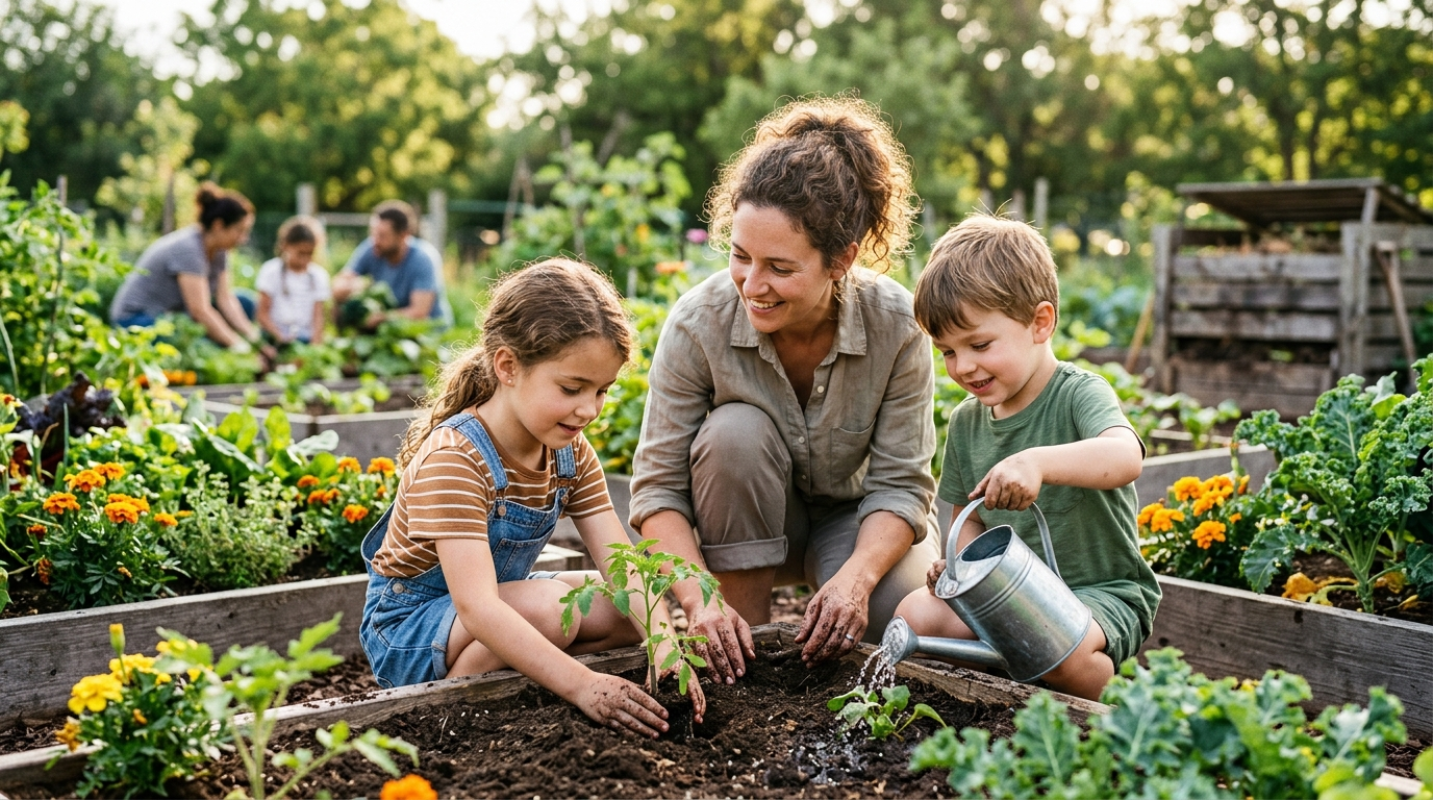
Think of your home and yard as a giant, interactive laboratory. You can teach the lifecycle of objects by starting a small garden or doing a quick upcycling project together.
Here are some fun, hands-on activities to try:
• Nature scavenger hunts: Create a checklist of local leaves, bugs, and rocks for your next walk in the park.
• The waste audit game: Have your kids help weigh the household trash for a week and turn it into a friendly competition to see if you can lower the number.
• Living laboratories: Plant a window herb garden or a small vegetable patch where your child gets to own their specific plot of soil.
When kids touch soil, watch seeds sprout, and see how kitchen scraps turn into compost, they learn natural cycles through experience. They are not just memorizing rules. They are enjoying the thrill of discovery.
The Power of Choice and Encouraging Agency Over Instruction
It is easy to fall into the trap of telling kids exactly what to do. But real, lasting habits form when children feel like they have a say in the matter.
A study published in April 2026 by researchers at Northeastern University, led by Assistant Professor Nirajana Mishra, analyzed over 1,500 families with middle-school children.² The researchers discovered that parents had almost no success changing their kids' environmental views through direct instruction. But when children participated in hands-on green programs, they actually reverse-educated their parents. In fact, parents of these active kids were 26 percent more likely to adopt green habits themselves, like switching to renewable energy certificates.²
This process is called trans-education, and it shows that kids need active agency. You can build this confidence by shifting your language from instructions to questions. Instead of saying, "You must do this," try asking, "What do you think we should do?"
Get them involved in household decisions.
• Eco-friendly shopping: Let them help choose the family's hand soap or laundry detergent by looking for eco-friendly labels.
• Meal planning: Ask them to help pick a plant-based meal for dinner once a week.
• Energy challenges: Let them be the official energy captain who checks if appliances are unplugged before bed.
When you value their input, you give them ownership. They are no longer just following your rules. They are making their own choices to protect their world.
Connecting with Nature as the Foundation of Stewardship
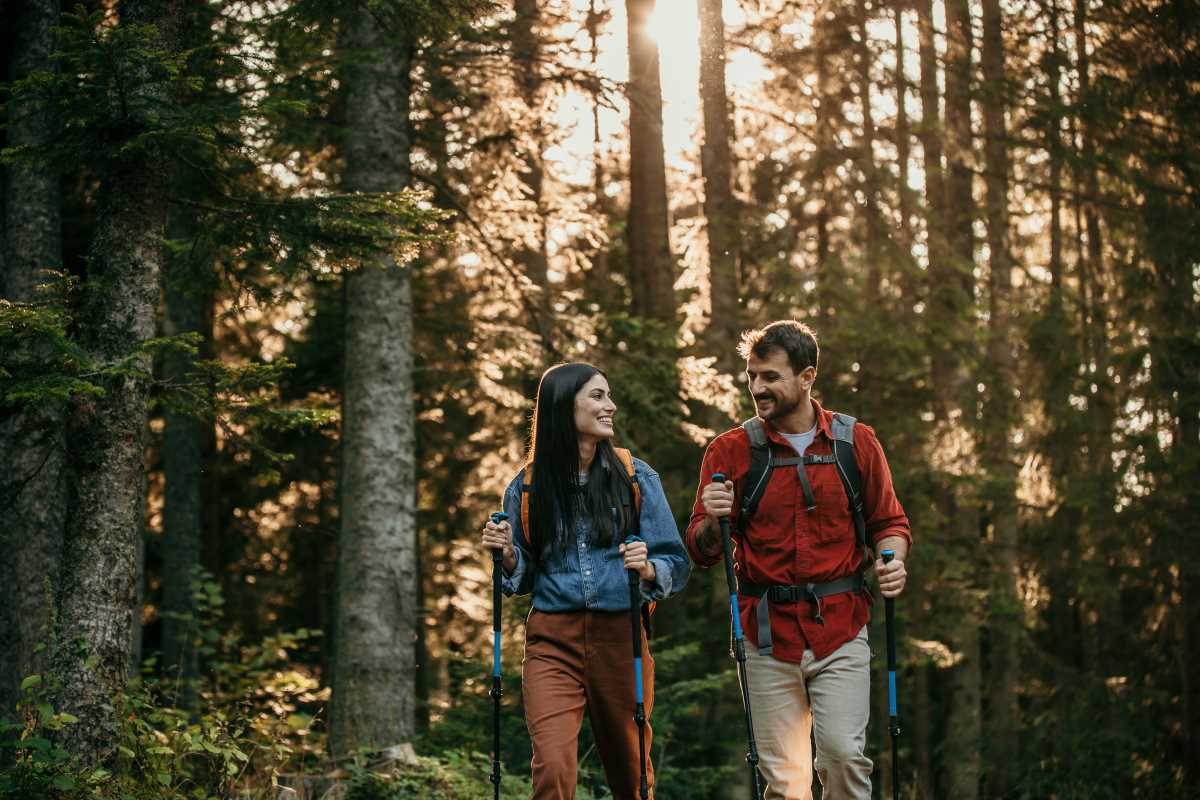
At the end of the day, children protect what they love. If they do not have a strong connection to the outdoors, abstract concepts like global warming will only confuse or scare them.
In fact, lecturing pre-adolescents about global environmental crises can do more harm than good. A major survey of young people showed that 85 percent are moderately worried about climate change, and nearly 43 percent say this anxiety actively hurts their daily mental health.³
Developmental psychologists point out that children between the ages of 5 and 12 are in what Jean Piaget called the concrete operational stage of cognitive development.⁴ They struggle to process massive, abstract global issues. When we dump these heavy topics on them, their emotional systems get overwhelmed, leading to feelings of helplessness.
The solution is simple: prioritize unstructured outdoor play. A study by the University of Glasgow tracked children's movements and found that spending just one hour a day in nature cut the risk of developing mental health issues by 50 percent.⁵
Let your kids climb trees, splash in puddles, and watch bugs crawl through the grass. These positive emotional associations with the environment build a deep, lasting bond. Once that bond is there, the desire to protect the Earth follows naturally.
To help your family transition into these green habits smoothly, we have gathered some excellent tools and products that make sustainable living easy and interactive for kids.
Building Lifelong Habits Through Joy and Consistency
Raising eco-conscious kids does not require a perfect, zero-waste lifestyle or daily lectures on carbon footprints. In fact, consistency beats intensity every single time.
When you focus on small, joyful actions, you help your children build a natural, lasting connection to the world around them. They will learn to respect the environment because they love being outside, because they enjoy watching things grow, and because they see you doing the same.
So, take a deep breath and let go of the pressure to be a perfect environmental educator. Enjoy the walks, play in the dirt, and let your kids lead the way. You might be surprised by how much they teach you in return.
Sources:
1. Tips to Raise Eco-Conscious Children
https://rare.org/stories-articles/tips-raise-eco-conscious-children/
2. Eco-Friendly Parents and Children Research
https://news.northeastern.edu/2026/04/21/eco-friendly-parents-children-research/
3. Youth Climate Anxiety Action
https://www.apa.org/monitor/2025/06/youth-climate-anxiety-action
4. Climate Anxiety in Pre-Adolescent Children
https://ipa.org.au/research/australian-way-of-life/climate-anxiety-in-pre-adolescent-children
5. Spending Time in Nature Boosts Kids Mental Health and Behavior
https://parents-together.org/spending-time-in-nature-boosts-kids-mental-health-and-behavior/